Posted in Law School

Miss. Supreme Court: You Better Not Fail the Bar Exam More Than Twice

Last week the Mississippi Supreme Court amended the Rules Governing Admission to the Mississippi Bar. Here is the Order.

Effective immediately, everyone who was admitted to practice without having to take the bar exam must pass the exam to continue practicing.

Just kidding old fellas.

Here is the new rule:

Section 8. Re-examination in Excess of Three.

An applicant who has unsuccessfully taken the Mississippi Bar Exam three (3) times shall not be eligible for re-examination until he or she has successfully completed at least twelve (12) additional semester hours of law school courses at an ABA accredited law school relevant to subjects covered by or skills necessary to the passage of the Mississippi Bar Examination. A certificate must be issued to the Board of Bar Admissions by the law school stating that the applicant has successfully completed these classes. Satisfaction of the requirement shall permit the applicant to retake the Mississippi Bar Examination on one (1) additional occasion. To be eligible for further re-examination, the applicant must comply with the requirements set forth above between each unsuccessful examination attempt.

The rule was not without disagreement. Justices Coleman and Chamberlin (in part) would not allow candidates who fail three times to retake the exam. Ever.

Justice Griffis advocates a maximum number of attempts of five and disagrees with law school serving as the only option for further education before another exam.

My Take:

I don’t have strong feelings on this issue.

Back when I knew people taking the bar exam, people generally failed because of poor time management studying, they were too nervous, or things really went bad on a subject or two. I don’t know what it’s like now.

My questions are: (1) how many people are there who fail the bar exam more than three times? and (2) do any of them ever pass.

If so, I wonder how many of them end up practicing law and saying: “I took the bar exam ___ times for this?”

I know a lot of people who passed the exam the first try who would say that.

Twitter
Facebook
Email
LinkedIn

A Shrinking Industry?

The Legal Skills Prof Blog ran this post about the legal industry losing 2,400 jobs in November. This followed gains in September-October.

Overall, the industry lost 100 jobs in the last 12 months.

My Take:

Another reason to avoid law school.

I don’t know why the industry isn’t growing. My guess is technology is eliminating jobs. But the reason doesn’t matter.

It’s hard enough to get a good job in growing industries. Going to professional school in a shrinking industry is fighting a dropping tide.You can do it and things may turn out fine. Still, there are better options for many.

Most people would be better off avoiding law school and pursuing a career in a growth industry.

Apparently, one of the hottest growth industries is weed. Something many college students already study.

Twitter
Facebook
Email
LinkedIn

Bar Passage Rates Are In

The new phone book is here! The new phone book is here!

Maybe not. But that’s still one of my favorite movie scene 40 years later.

But the passage rates from the July 2018 Mississippi Bar exam are in: 58.8% passed.

A bit over 4 out of every 10 failed. Some would call them the lucky ones.

175 people took the exam.

The passage rate for Ole Miss’ first time takers was 73.7%. Here is the school’s press release. It says 38 students were first time takers. I don’t have MC’s stats.

My Take:

Congratulations if you passed. Now you know how Navin Johnson felt.

The passage rates shouldn’t be what they were before 2008 because a legal career is not as attractive a profession as it used to be. Many smart people who don’t burn to be a lawyer wisely pursue other careers.

That’s how it should be. This is a tough profession. It should be reserved for idiots like me who burned for it and, despite all my bitching, couldn’t imagine doing anything else.

I feel bad for the people who failed. If it’s anything like when I took the exam, it’s the most stressful experience of your life. Until then, that is. Life gets a lot more stressful with jobs, marriages, kids, divorces, loved ones dying and someone eating your lunch you stashed in the break room fridge.

Sidebar: I suspect the movie ‘The Usual Suspects’ was actually inspired by efforts to identify the break room food thief at a law firm.

It’s been 25 years, but I remember bar exam week better than I remember last week. The memories:

  • the jackhammer going off out on the street outside the Robert E. Lee building where we took the test;
  • some people were too nervous to sleep at night;
  • one guy was so nervous he chain smoked a carton of cigarettes;
  • one dude punched a classmate in the nose at the after party;
  • a bit later, the punchee was woken by a cop taping on his car window while passed out at a red light on State Street (he let him go because he was covered with blood and the cop didn’t want to take him to the hospital); and
  • my then wife and me driving to D.C. for a wedding and her asking me my answer on what seemed like all 200 multi-state questions, usually with her crying and saying she failed (she passed).

The bar exam was one of those horrible life experiences that you remember fondly. When you pass.

Try not to get too discouraged if you are one of the unlucky ones who failed. I know some great lawyers who failed on their first attempt.

My advice is to focus on your process for studying for the test. Figure out how you can prepare better next time.

There is too much material to just sit down and study for hours. You need a study plan. Build a couple of extra weeks into your plan so that you are ready early or have extra time on the back end to focus on trouble subjects. You should not need to study the weekend before or at night during the exam.

I studied 8 hours a day, seven days a week for a month. Then I went to 14 hours a day, seven days a week for another month. Maybe I cut it back at night on the weekend–I don’t remember. It was not sit down and study. I made outlines for the state sections and took practice tests for the multi-state. I attended the bar review, but I wouldn’t today if I had to take another state’s exam (always possible for Mississippi lawyers). The time would be better spent on my own.

Yes, I do know people who never passed. And you know what? They are glad. They see the rest of us today and realize that odds are, they are happier today than if they had practiced law the last 25 years.

Twitter
Facebook
Email
LinkedIn

Why is the Legal Industry Shrinking?

The ABA reports that the legal industry lost jobs for two months in a row. The combined jobs lost for July and August was 4,200 jobs. 200 fewer people work in the industry than this time last year.

Among the fields categorized as ‘professional and business services’, the legal industry is the only one losing jobs. For instance, accounting/ bookkeeping and architectural/ engineering are both up.

My Take:

Stats like these are a big deal. In a growing economy where more and more jobs are service-based, you would hope to see jobs growth in an industry. Why is the legal industry shedding jobs?

Technology? Fewer lawsuits? Continued centralization of litigation in MDL’s?

All of the above.

This is another reason to avoid law school. Career prospects are better in growth industries.

Twitter
Facebook
Email
LinkedIn

The Best Argument Against Law School I Have Read

Written in 2016, this Steven Waechter article calling law school financial suicide is still on point today. The article contains important facts and great analysis:

Of those, about 354,000 were self-employed sole practitioners, and they were earning an average of $49,000 in 2012 according to the IRS, a 30 percent decrease for that cohort since 1988 in inflation-adjusted dollars…

This massive overproduction is supposedly justified on several grounds, including an impending wave of Boomer retirements, which the BLS statistics show to be utter nonsense; and the huge unmet need for legal services in underserved poor and rural communities. The logic here is that the army of surplus law-trained labor, rendered unemployable due to the massive glut of graduates, will then be available to provide free or deeply discounted legal services in furtherance of social justice. I guess they are to live in wigwams and eat squirrels scavenged from the side of the road as they do so…

Imagine landing a $35,000 associate position – which might be generous for rural practice – when you have $180,000 in student loan debt, and $12,000 per year in payments of interest alone. The penalty for going to law school and failing to become a lawyer is complete financial annihilation, which is also increasingly the reward for success…

Encouraging more young people to flush away their financial future on law school knowing that employment opportunities are severely limited is counterproductive, unethical, and downright vicious..

My Take:

Read the whole thing. Send it to anyone you know who is thinking about attending law school.

I’m not advocating that no one go to law school. If you have a job lined up before you start because you will practice with a family member, then your analysis is different. Two of the most impressive young attorneys I’ve encountered in the last few years practice with a parent who is a great lawyer.

Thinking a family member can get you a job doesn’t count. The family member has to be able to hire you.

Your dad may golf with the managing partner at Butler Snow. That could help–if you finish in the top 5 in your class. In which case, you would have gotten an interview anyway.

Many people attend law school for the wrong reasons. A lot of trial attorneys are ex-jocks. Many of them become lawyers because of a thirst for competition. That was likely the main factor in me becoming a trial lawyer even though I was just a jock wanna-be.

The problem with competitiveness fueling a legal career is that it does not translate well. This is not a game of pick-up basketball. This is nothing like a game of pick-up basketball. This is more like trying to build a house with someone following behind you trying to tear it down.

And that’s before we even wade into to mind of the decision makers in litigation. Clients, in-house counsel, supervising attorneys, adjusters, judges, jurors, appellate judges. They all have their own way of viewing things. It may be different from yours. That can create a lot of frustrations and anxiety in the profession.

The worst reason for going to law school is because you can get in. Figure out what you want to do.

I am a huge fan of this profession. I like my colleagues. I find many lawyers who are hard to deal with endearing in a weird way. I get that they are trying to do their job–not do mine for me. It’s not personal.

But this is a hard profession. It’s not for everyone.

Twitter
Facebook
Email
LinkedIn

Hoopla Over 53% Bar Passage Rate

There was a front page article yesterday in the Clarion-Ledger about the 53% passage rate in Mississippi for the July Bar Exam. It opens:

Entering the legal profession in Mississippi is once again proving difficult for those seeking to become a licensed attorney.

The July Mississippi bar exam results released last week showed about 53 percent of the 172 who took the exam passed.

Passage rates are dropping as smart students decide against law school.

Above the Law covered the State’s passage rate in a snarky post here, saying Mississippi’s Bar Exam results “suck.” From ATL:

The results from Mississippi’s July 2017 administration of the bar exam were released yesterday, revealing that only 53 percent of all test-takers passed. That’s an 18 percentage point drop from the July 2016 exam, and a staggering 27 percentage point drop from the July 2013 exam. Something is wrong here.

ATL blames the low passage rates on declining admission standards and dismisses the suggestion that students from out of state law schools are failing the exam:

Some have speculated students from out of state attending law schools in Mississippi may be leading to lower passage rates.

Apparently Mississippi law school graduates who aren’t Mississippi locals are causing lower passage rates on the Mississippi bar exam. That’s a new one we’ve never heard before, and the logic it took to get there may explain why the passage rates on the Mississippi bar exam have sunk to historic lows.

For context, Ole Law School Dean Susan Duncan wrote about the issue here.

31 of 41 (75.6%) first time takers from Ole Miss Law passed the exam. Duncan’s explanation points out that repeat takers of the Bar Exam fail by a 2-1 margin. Duncan’s stats also peg Mississippi’s passage rate at 55.9%.

Ole Miss has reduced its class sizes and denies declining admission standards.

Also, according to this 2013 Witnesseth Blog Post, Mississippi’s Bar exam does not rank among the nations easiest to pass. It ranked 20th hardest.

The Clarion-Ledger article notes that the national average was 58% in 2016.

My Take:

I have trouble getting worked up over this issue.

There aren’t enough jobs waiting for the 53% who passed. No one will need a bar card to yell “Welcome to Moe’s” every time someone walks in the restaurant.

The sad fact is that we still have an over-supply of lawyers in Mississippi. That’s the reality that the people who do pass face on day 1.

As for the exam results, the main problem is that repeat exam takers keep failing. Some people try for years and never pass.

As fewer people take the exam, the people who keep taking it and failing have a disproportionate statistical impact on the passage rate.

Should the Mississippi Board of Bar Admissions pass more people to make the numbers better? No.

Should Mississippi go back to the days where state law school graduates don’t even have to take the exam? God no.

It’s easy to write about Bar Exam passage rates. But the bigger and more important stories are the job market for attorneys, fact that many talented attorneys are leaving the state for better opportunities and the mental health of attorneys.

Twitter
Facebook
Email
LinkedIn

Tough Choices for Mississippi College

The following is a guest post by Jackson attorney Ken Walley. It was drafted on the heels of the recent Clarion-Ledger article extolling the virtues of a law degree that this blog covered here.

Dean Rosenbatt retired at the right time. The collapse in demand for law degrees is hitting Mississippi College hard. 2011 saw MC’s last big class: 214 students. Then, reforms pushed by the watchdog group Law School Transparency and negative media attention gave college students the picture of the job market that law grads already knew. As applications fell, MC shrank the 1L class size by 55 students and maintained quality. That is, until 2014, when the bottom fell out:
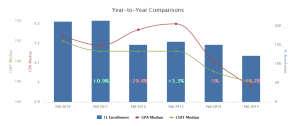
graph 1Source: Law School Transparency. For a sharper image click here.

What the graph doesn’t show is what is happening at the bottom of the class. The 25th percentile of the 2010 1L class had an LSAT and GPA of 147 and 2.94, respectively. That’s about what the median student looks like today. Despite a 40% cut in the class size to 122 students, the 25th percentile of the 2015 1L class was at 142 for the LSAT and a GPA of 2.73. A 142 LSAT score would put you at the 18th percentile of all test-takers (including those that don’t go to law school), and you’ve still got a quarter of your law school class below you. I will focus on the bottom of the class, because I assume that’s where you’ll find those that fail the bar exam, rather than at the middle or top.

Even to be an unemployed lawyer, you’ve got the pass the bar exam, and GPA and LSAT scores are available indicators for test-taking ability. According to Law School Transparency’s metrics, students at the 75th percentile of MC’s 2015 1L class are at high risk for failing the bar, and more than a quarter are considered at “extreme risk.” MC’s bar passage rates are about to become very, very important.

In June, a Department of Education panel recommended temporarily stripping the ABA of the power to accredit new law schools, a responsibility it has held for 93 years. Under heightened scrutiny, the ABA is likely to amend the minimum bar passage requirement for schools to require at least 75% of all graduates that take a bar exam to pass within two years for a school to remain accredited.

Passage rates are declining with student quality all over the country, and Mississippi is no exception. As I recall, when I took it in 2009, the passage rate was 85%. The passage rate for Mississippi’s July, 2015 bar exam was 70.2%. For 2014, MC Law reported an average school pass rate of 72%, which is below the new requirement. The students that took that bar exam are measurably better than the ones that will be taking the bar in 2017 and 2018.

The ABA’s consumer information disclosures have been around long enough that we can now follow a class from its 1L year through to when it takes the bar exam. In 2011, there were five law schools in the country that had 25th percentile LSAT scores in the low 140’s, as MC now does, and we can see how each performed on the bar exam three years later:

School 25th percentile LSAT (2011) 25th percentile GPA (2011) Passage rate (2014)
Appalachian University Law School 142 2.66 44.1%
Lincoln Memorial School of Law 144 2.7 78.57%
U. of Puerto Rico School of Law 143 3.38 55.56%
Southern University Law Center 143 2.59 55.57%
UMass-Dartmouth School of Law 142 2.85 64.91%
Mean Passage Rate: 59.7%

Last year, Mississippi bar repeat takers passed at a rate of 35%. This number includes MC and Ole Miss classes that were more academically qualified than the MC Law classes that started in 2014 and 2015. Assuming the Class of 2018 follows the average pass rate of these comparable schools, and that every student who fails the bar takes it one more time (in reality, some will give up after the first try and few can afford the $825 exam fee more than twice) and passes at a 35% rate, we get an expected composite two-year pass rate for the MC Class of 2018 of 73.8%. Not good enough.

To prevent law schools from gaming the system by taking more 1L students only to fail them before they can take the bar, the ABA is also expected to amend its rules to impose a 20% maximum attrition rate. When a school exceeds that, there is a rebuttable presumption that the school has made exploitative admissions decisions. MC’s attrition rate is 20.5%. If more risky students come that cannot be removed before they take the bar, MC’s accreditation will be under review 2-3 years from now.

From what Dean Scott says, applications are up this year, but nationally they’re only up about 1% from their lowest numbers since the late 1970’s. Those applications are also coming later in the year, indicating a lack of enthusiasm for law school. Students are demanding bargains, and they’re not bringing the credentials they used to. Top students are unconvinced that any law school would be a good idea even with hefty grants. MC’s median scholarship is almost twice what it was 5 years ago and more students get them, but it hasn’t allowed them to get any more selective. At an 85% acceptance rate, MC approaches a de facto open admissions policy.

With class size almost halved and scholarships up, its not crazy to assume that MC’s revenue will halve. If MC Law’s costs haven’t adjusted, Mississippi College will not go deep into its small $69 million endowment to support it. Without the ability to put a lot more cash on the table, Dean Scott should not expect future classes to look any better than this last one.

MC could shrink the class size yet again, but their riskiest students constitute at least one-third of this last class and maybe as many as half of them. Is it worth staying open with class sizes of 60 or 70? MC will need to provide intensive bar prep classes for students and grads who’ve failed the bar, and maybe even dissuade poor students from taking the bar, hopefully by finding them non-legal jobs. Alternatively, MC could lobby the Supreme Court to make the bar exam easier, like Oklahoma did recently. There aren’t a lot of good choices, but MC has to act now. If there is even a question about losing their accreditation, it’ll scare off the qualified students they need.

Twitter
Facebook
Email
LinkedIn

Reading Between the Lines in the Clarion-Ledger’s Latest Law School Article

The Clarion-Ledger ran this Jimmy Gates commercial article about law school on Monday. The article quotes Ole Miss Law dean Deborah Bell and MC Law dean Wendy Scott.

Here are some of their comments:

Deborah Bell, interim dean of the University of Mississippi Law School, says the legal job market is certainly not what it was a decade ago — but there will always be a need for high quality legal work.

Translation:

No one is hiring now. But top shelf lawyers with 20+ years experience might get hired on a case.

“And a law degree is not just a path to law practice — some students leave law school to work in business, real estate, higher education or other professions where a law degree gives them an advantage,” Bell says.

Translation:

There are no legal jobs for graduates.

Scott says despite talk of a lawyer glut, there remains a shortage of lawyers in Mississippi, which means that too many people in Mississippi are without access to legal services.

Translation:

Welcome to MC Law’s Crazy Talk, with Dean Wendy Scott. In fairness, Bell made a similar comment. It’s not the first time I’ve heard this line either. But it’s extremely misleading when it does not include the disclaimer that they are talking about people who can’t afford to pay for a lawyer.

“Other studies suggest that not only are there unserved legal needs among our poor citizens, the justice gap is wide for working and middle class citizens as well,” Scott said. “Small business owners, people planning to start a business, working families facing foreclosure or bankruptcy, parents in jeopardy of losing their children — these are just a few examples of the kinds of legal needs that go unmet every day.”

Translation:

You can get plenty of legal work. You just won’t get paid.

Do the law schools understand that those legal needs go unmet because lawyers can’t work for free anymore than plumbers or law school professors?

You can read about this problem on the Mississippi Access to Justice Commission’s website. I don’t think you’ll read on it that the solution to the problem is more law school graduates.

Meanwhile, over at the Law 21 blog, ‘Debbie Downer’ Jordan Furlong has this post titled: The Obsolete Associate. Here’s a snippet:

Layoffs and hiring freezes at many law firms, occurring both in the immediate financial crisis and during the malaise that followed, contributed to a growing pool of unemployed and under-employed young lawyers and recent law graduates….

…All of this helps explain the stubbornly high levels of unemployment experienced by US law graduates over the past several years, numbers that have mostly held steady despite an historic drop in the number of law school applications…

Translation:

It’s not just a Mississippi problem.

Summary:

I love MC’s new strategy: “there aren’t too many lawyers–there are too few.” Brilliant. Best line since “these aren’t the droids you’re looking for.”

Overall, I thought the deans’ comments were measured if you know how to interpret them. They were negative without sounding negative. There’s plenty of legal work for those who don’t need to get paid to do it. By the way, those clients will also need you to come out of pocket to cover case expenses.

My criticism of the article was that it did not quote any recent law school graduates. Those are the people who are in the best position to comment on the current value of a law degree.

Asking the deans of the law schools is like asking the salesman at the Ford dealership if Fords are good cars. They have to say yes. Law school deans sell law degrees. What are they going to say? Don’t go to law school?

Twitter
Facebook
Email
LinkedIn