Uncategorized

Mississippi Judicial Elections Covered in HBO Documentary Hot Coffee Airing Monday

On Monday night at 8:00 p.m., the documentary Hot Coffee airs on HBO. You can watch the official trailer for the movie below. The film analyzes tort reform in the U.S.

In addition to the famed McDonald’s spilled-coffee verdict, the movie covers Mississippi Supreme Court elections and the prosecution of former Mississippi Supreme Court Justice Oliver Diaz. John Grisham, Justice Diaz and Jackson lawyer Rob McDuff are all shown in the trailer.

Twitter
Facebook
Email
LinkedIn

My Thoughts on HBO’s ‘Hot Coffee’ Documentary about Tort Reform

I watched the HBO documentary Hot Coffee on Monday night. Here are a few random thoughts.

  • The Mississippians in the documentary were superb. Former Miss. Supreme Court Justice Oliver Diaz, Jackson attorney Rob McDuff, former Miss. Supreme Court Justice Chuck McRae and author John Grisham all spoke eloquently and convincingly.
  • I had forgotten how bogus the government’s case against Diaz appeared. For me, the fact that the government prosecuted Diaz soiled the prosecutions of Minor, Teel and Whitfield. I don’t have a problem with those prosecutions. But the decision to prosecute Diaz was a mistake and, in retrospect, looks politically motivated.
  • I felt stupid to have never connected the fact that taxpayers pay for the cost of tort reform. When tort victims fully recover in the Court system, Medicaid and Medicare are reimbursed and are not saddled with the plaintiff’s future medical care. Under the cap system, people wind up back on the Medicaid rolls and these entities receive less reimbursement.
  • It also reminded me that the system that Mississippi nursing homes use to shield their operators from liability also shifts the burden or paying for their negligence to taxpayers who are funding Medicare and Medicaid.
  • I had never seem the pictures of the burns to the legs of the victim in the McDonald’s coffee case or heard the actual facts of the case. The fact that people in this country were misled by her lawsuit is sad.
  • The documentary solidified what I had already figured out: the general public does not understand tort reform. They believe that caps apply to frivolous lawsuits. In fact, the opposite is true. Caps only come into play in non-frivolous cases with extensive injuries. Big business has effectively and intentionally misled the public on this issue.

The film made me sad. Sad for the victims portrayed in the film, who were under compensated due to caps or kept from the courthouse due to mandatory arbitration clauses. Sad for the American public, who were duped into supporting tort reform by those they trust.

The film also made me sad for my profession. The legal profession has had its image tarnished by greedy ambulance chasers who advertise that they can get large sums of money for accident victims who were not really hurt. They may not come out and say that in their ads, but that is what they are selling.

Have you ever noticed that in lawyer commercials with people who got a big check, the people don’t look hurt? How it’s never the family of the dead guy? Or the woman who lost her leg? Or the child who suffered brain damage and will never be able to take care of herself? Think these commercials could be a factor in public support of tort reform?

Twitter
Facebook
Email
LinkedIn

My Take on the Supreme Court’s Decision Affirming $4 million Premises Liability Verdict

That sound that you just heard was the jaws dropping of lawyers all over Mississippi in reaction to the Mississippi Supreme Court’s decision in InTown Lessee Associates v. Howard. The Court affirmed a total verdict of $4 million to two plaintiffs were were beaten and robbed at the InTown Suites on I-55 in Northeast Jackson.

Here are the key phrases from Justice Kitchens’ unanimous opinion, which it states repeatedly:

“InTown argues for the first time on appeal……”

and

“InTown did not make a contemporaneous objection [at trial]……”

Translation: InTown had nothing to appeal because the potential appeal issues were not preserved during the trial.

For instance, InTown couldn’t really attack the damages amount on appeal because at trial InTown agreed to a verdict form that did not separate economic and non-economic damages. The opinion states:

“InTown did not object to these instructions. Because it did not object to the form of the jury instruction at trial, InTown is procedurally barred from doing so on appeal.”

When I blogged about this verdict in 2009 I stated that there was no defense at trial. Even so, I am a little surprised to see this large of a verdict get affirmed on appeal. But if you think about it, this Supreme Court doesn’t have much tolerance for stuff like not preserving objections.

Judge Tommie Green was the trial judge. Jackson attorney Ashley Ogden represented the plaintiffs. Defense trial counsel were Wade Manor and Andy Clark with the Scott Sullivan law firm in Ridgeland.

InTown’s appellate counsel were Trey Jones and Joseph Sclafani with the Brunini law firm in Jackson. To be fair to those guys, they were not hired until after the trial and were playing a losing hand that had already been dealt. Ogden has a reputation of refusing to discuss settlement after trial, so it’s unlikely that there was anything that the Brunini lawyers could do to save this one.

This decision will be good for the business of appellate defense lawyers. The take-away for large corporations and insurance companies is to hire your appellate lawyers before the trial and have them in the courtroom to make sure that all potential appeal issues are preserved.

Here is Randy Wallace’s take on the decision.

Twitter
Facebook
Email
LinkedIn

A Look at Union Carbide’s Recusal Motion in $322 Million Smith County Asbestos Verdict

Union Carbide wants Smith County Circuit Judge Eddie Bowen to recuse himself from hearing further proceedings in the inexplicably massive asbestos verdict rendered last month. Here is Union Carbide’s motion.

Union Carbide points to the fact that Judge Bowen’s father settled an asbestos case with Union Carbide 20 years ago. Union Carbide figured this out after the trial based on an investigation instigated by Judge Bowen’s comments about his father during trial.

According to Union Carbide, this creates a blatant conflict of interest that requires Judge Bowen to recuse himself. Significantly, during voir dire Judge Bowen struck for cause all panel members who themselves or their immediate family members had ever asserted an asbestos claim.

My Take:

It’s a well-written motion. Perhaps a little heavy on the use of text in the footnotes, but that is a matter of personal preference. I use more footnotes than most lawyers. But I mostly use them for citations. Legal writing guru Brian Garner contends that citations in the body make pleadings and briefs harder to read.

I can see Union Carbide’s point. But the fact that the settlement was 20 years ago and Judge Bowen allowed nine days of voir dire weigh against recusal.

The motion goes slightly over the top at times. Using professional wrestling terminology, the motion’s reference to the elder Bowen’s case being filed by “the law firm of ‘Dickie Scruggs, P.A’.” invokes ‘cheap heat.’ It would be like the ‘villain’ in a wrestling show in Oxford taking the mike and saying Ole Miss sucks and Miss. State is the best school in Mississippi. That would be cheap heat.

There was no such thing as “Dickie Scruggs, P.A.” Scruggs didn’t refer to himself as “Dickie” and a review of the Secretary of State’s corporate records confirms there was no entity by that name. It’s my understanding that ‘Dickie’ was a nickname for Scruggs used by some of his closest friends and people who didn’t know him at all. I guess saying “Richard F. Scruggs P.A.” just didn’t have the same ring to it.

Apparently, we’re in a period of Scruggs cheap heat references. Like in the Madison County Journal article that I discussed in this post. These references to Scruggs appear forced and a bit silly.

Strategically, Union Carbide is in an interesting position. Do they really want another judge assigned to the case who is more likely to order a new trial? Does Union Carbide really want a new trial in Smith County before its appeal to the Mississippi Supreme Court? I don’t think I would.

What Union Carbide could be doing is trying to knock Judge Bowen out from hearing its other cases in Bowen’s circuit and any re-trial of the Smith County case after an appeal.

Twitter
Facebook
Email
LinkedIn

Gannett’s Newspaper Headlines are Nuts

Gannett ran the same article on Mississippi jury verdicts in two newspapers on Sunday. The headline of the article in the Hattiesburg American was “Jury Awards Running Rampant.” Meanwhile, the headline for the same article in the Clarion-Ledger was “Jackpot awards still occur.”

The actual article opens with a softer tone:

Large verdicts still are being won here and there in Mississippi nearly 10 years after the state passed legislation capping damages jurors can award in civil cases.

I guess that is sort of true. Highly misleading. But sort of true. The key words being “here and there” with an asterisk to denote that jury verdicts don’t reflect actual recoveries, if any.

The article cites a grand total of two cases. First, the Cole v. Ford Motor Co. verdict that I discussed a lot on this blog. The case involved the death of professional baseball player Brian Cole. The general manager for the New York Mets testified at trial that Cole was going to play in the majors. There was a $131 million verdict in the third trial and the case settled. A comment to one of my posts cites a rumor that the case settled for $12 million. Far south of $131 million and a reasonable figure for a pro baseball player.

Second, the $322 million Smith County asbestos drilling mud verdict that I discussed here and here. The article quotes Raleigh lawyer Gene Tullos, who represented the plaintiffs at trial. I have heard that the plaintiffs asked for far less in damages than was actually awarded. The verdict is being chalked up to the Gene Tullos Smith County phenomenon.

The article goes on to state that the defendant does not expect the verdict to stand on appeal:

Union Carbide has confidence in the Mississippi appellate courts and believes – without hesitation – That this verdict will be completely set aside by post-trial motions or through the appellate process,” company spokesman Scot Wheeler said.

“While the case lacks any merit, by just applying the applicable damage limitations, the total award against Union Carbide should be reduced to substantially less than $1 million.”

Union Carbide’s confidence is well placed. The chances of that verdict getting affirmed on appeal are less than zero.

As I have discussed previously, plaintiffs are getting crushed in trials in Mississippi. Jury awards are not “running rampant” and any verdicts that are out of line get reversed by the Mississippi Supreme Court. The fact of the matter is that anyone who gets a verdict out of a Mississippi jury and then gets that verdict paid or affirmed on appeal has earned it and deserves it.

The thing that bothers me about this newspaper article is that it sends a message that is wrong. Perhaps intentionally. Perhaps not. Lawyers and judges know that juries are not running rampant, but the general public doesn’t.

The article misses the real story. Why is there a $322 million verdict coming out of Smith County, which looks ultra-conservative on paper? Why are there so many large verdicts coming out of Judge Billy Joe Landrum’s courtroom? Those are interesting questions that would make for a good story. But the Gannett article misses those questions on its way to a shallow article with misleading hysteric headlines.

Twitter
Facebook
Email
LinkedIn

Miss. Supreme Court Reverses and Remands Rankin County Defense Verdict–Rules that Each Wrongful Death Beneficiary May Fully Participate in Trial

On Thursday a unanimous Mississippi Supreme Court reversed and remanded a 2009 Rankin County defense verdict based on the trial court’s refusal to allow attorneys representing different wrongful death beneficiaries to separately question witnesses during trial. Here is the Court’s opinion in Dooley v. Byrd.

Facts:

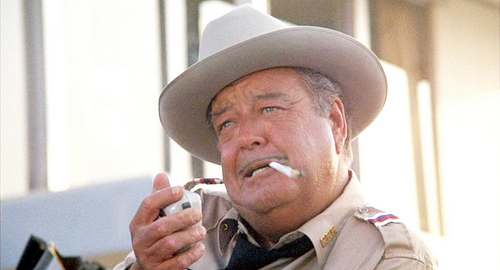
The case involved the death of two-year-old Jonathan Dooley, who was killed when the car driven by his mother collided with a trailer owned by the defendants. The facts of how the accident happened were disputed and not germane to the Court’s opinion. (I know… “the G.D. Germans got nothing to do with it”Sheriff Buford T. Justice).

Dooley had 5 wrongful death beneficiaries. Jackson lawyers Don Evans and Jim Smith (former Chief Justice of the Miss. Supreme Court) represented 3 of the beneficiaries, including Jonathan’s mother. William Fulgham represented the other two beneficiaries, including Jonathan’s father.

Apparently, Jonathan’s parents were separated or already divorced at the time of the accident and there was no love lost between them.

At trial, the two sets of lawyers had different theories and strategies. Rankin County Circuit Judge Samac Richardson (now retired) allowed each set of attorneys to give opening statements. The opinion states:

However, peace was short-lived when, in the second day of trial, Dewey requested the court’s permission to question Byrd after Leah had completed her examination of him.

The trial court refused, instructing plaintiffs’ counsel to work together in presenting their case.

Supreme Court’s Decision:

The Court agreed that plaintiffs’ counsel should have been allowed to separately question witnesses. The Court also determined that there was reversible error in the jury instructions. As a result, the Court reversed the judgment and remanded the case for a new trial.

Chief Justice Waller wrote the Court’s opinion. Justices Kitchens and King did not participate.

My Take:

It will be interesting to see if there are any repercussions from this opinion in other cases. For instance, will some aligned wrongful death beneficiary-plaintiffs show up with different attorneys for the strategic reason of getting two bites of the apple with respect to trial participation? How big of a mess will it be when the beneficiaries have different lawyers and can’t get on the same page?

Double teaming already happens on the defense side all the time in cases with multiple defendants. You see defense lawyers play “good cop, bad cop” in the name of separate defendants. However, it’s been my impression that double-teaming at trial has limited benefit and probably is a waste of time.

It will be interesting to see how this decision impacts how plaintiff lawyers try wrongful death cases. In this case it seems like it caused a big mess due to the different theories.

Incidentally, if this is the right case that I am thinking of I heard that Don Evans and Jim Smith weren’t getting along at trial either—even though they represented the same beneficiaries.
Twitter
Facebook
Email
LinkedIn

A&O Update

Here is a brief update on what is going on with the A&O Life criminal defendants:

  • Adley Abdulwahab: trial set for June 7, 2011
  • Christian Almendinger: sentencing August 12, 2011
  • Brent Oncale, Russell Mackert, Eric Kurz, Tommy Browseth: sentencing July 22, 2011

I can’t imagine Wahab actually going to trial. But I hope that he does, since a conviction at trial may carry a longer sentence than a guilty plea.

Twitter
Facebook
Email
LinkedIn

A&O Update: Virginia Jury Convicts Abdulwahab on 15 Counts, Sentencing Schedulted for September 28

Wall Street’s Most Wanted Report Securities Fraud Blog reports that on Friday a federal court jury in Virginia convicted A&O Life co-founder Adley Abdulwahab for his involvement in the $100 million A&O Life fraud scheme. image

According to the government’s press release:

Today’s quick verdict found Mr. Abdulwahab guilty of a $100 million fraud and stealing the life savings of elderly retirees and hundreds of others who have seen everything they worked years for disappear,” said U.S. Attorney MacBride. “This case, involving victims in dozens of states, clearly demonstrates that a national fraud case can have real implications to everyday people. That is why we created the Virginia Financial and Securities Fraud Task Force last year to go after national cases that impact ordinary citizens on Main Street as well as Wall Street.”

“Mr. Abdulwahab participated in a $100 million fraud scheme, cheating more than 800 victims across the United States and Canada,” said Assistant Attorney General Breuer. “While lying to investors about his education and criminal history, he was off buying fancy cars with their money. Today, a jury let him know that financial crime has consequences, and that investment fraud will not be tolerated.”

Today’s quick verdict found Mr. Abdulwahab guilty of a $100 million fraud and stealing the life savings of elderly retirees and hundreds of others who have seen everything they worked years for disappear,” said U.S. Attorney MacBride. “This case, involving victims in dozens of states, clearly demonstrates that a national fraud case can have real implications to everyday people. That is why we created the Virginia Financial and Securities Fraud Task Force last year to go after national cases that impact ordinary citizens on Main Street as well as Wall Street.”

“Mr. Abdulwahab participated in a $100 million fraud scheme, cheating more than 800 victims across the United States and Canada,” said Assistant Attorney General Breuer. “While lying to investors about his education and criminal history, he was off buying fancy cars with their money. Today, a jury let him know that financial crime has consequences, and that investment fraud will not be tolerated.”

Five individuals have pleaded guilty in connection with the A&O fraud scheme: David White, the former President of A&O; Brent Oncale, former vice president of A&O; Russell E. Mackert, an attorney for A&O; Eric M. Kurz, a wholesaler of A&O investment products; and Tomme Bromseth, an A&O sales agent in the Richmond area.

A jury convicted Christian Allemindinger in March. The Houston Chronicle reports that sentencing will be in September.

My Take:

These guys are going to get significant prison time, which they deserve. I don’t know why some or all of them would not get Madoff type sentences (150 years).

I’m going to go out on a limb and guess that Wahab is not going to follow through with his 2009 threat to sue me in Texas for defamation for suggesting that he was involved with A&O and that A&O was crooked.

Twitter
Facebook
Email
LinkedIn

Miss. Supreme Court Affirms $4 million Hinds County Premises Liability Verdict

The Mississippi Supreme Court affirmed a $4 million Hinds County premises liability verdict today. Here is the opinion. This was the 2009 Ashley Ogden In Town Suites case that I discussed here.

I will post more on this decision later.

Twitter
Facebook
Email
LinkedIn

May Edition of Miss. Jury Verdict Reporter Hits the Newsstand

The May issue of the Mississippi Jury Verdict Reporter hit newsstands on Tuesday. This edition includes 13 verdicts from 2011.

Seven of the 13 verdicts were defense verdicts. The defense verdicts included two from Hinds County Circuit Court with one tried before Judge Winston Kidd and one before Judge Tommie Green.

Of the six 2011 plaintiff verdicts covered, three were for under $100,000. One plaintiff verdict was the $1.7 million Jones County verdict that I discussed here. Another plaintiff verdict was the $1.1 Gulfport federal court verdict that I discussed here. There was also a $250,000 plaintiff verdict in a Tunica County casino slip-and-fall case.

Here is my post about last month’s issue of MJVR. Every litigator in Mississippi should be reading this publication.

Twitter
Facebook
Email
LinkedIn